Street-Level Software
DILLY DALLEY CAT
A temporary multiplayer layer built over a small town.
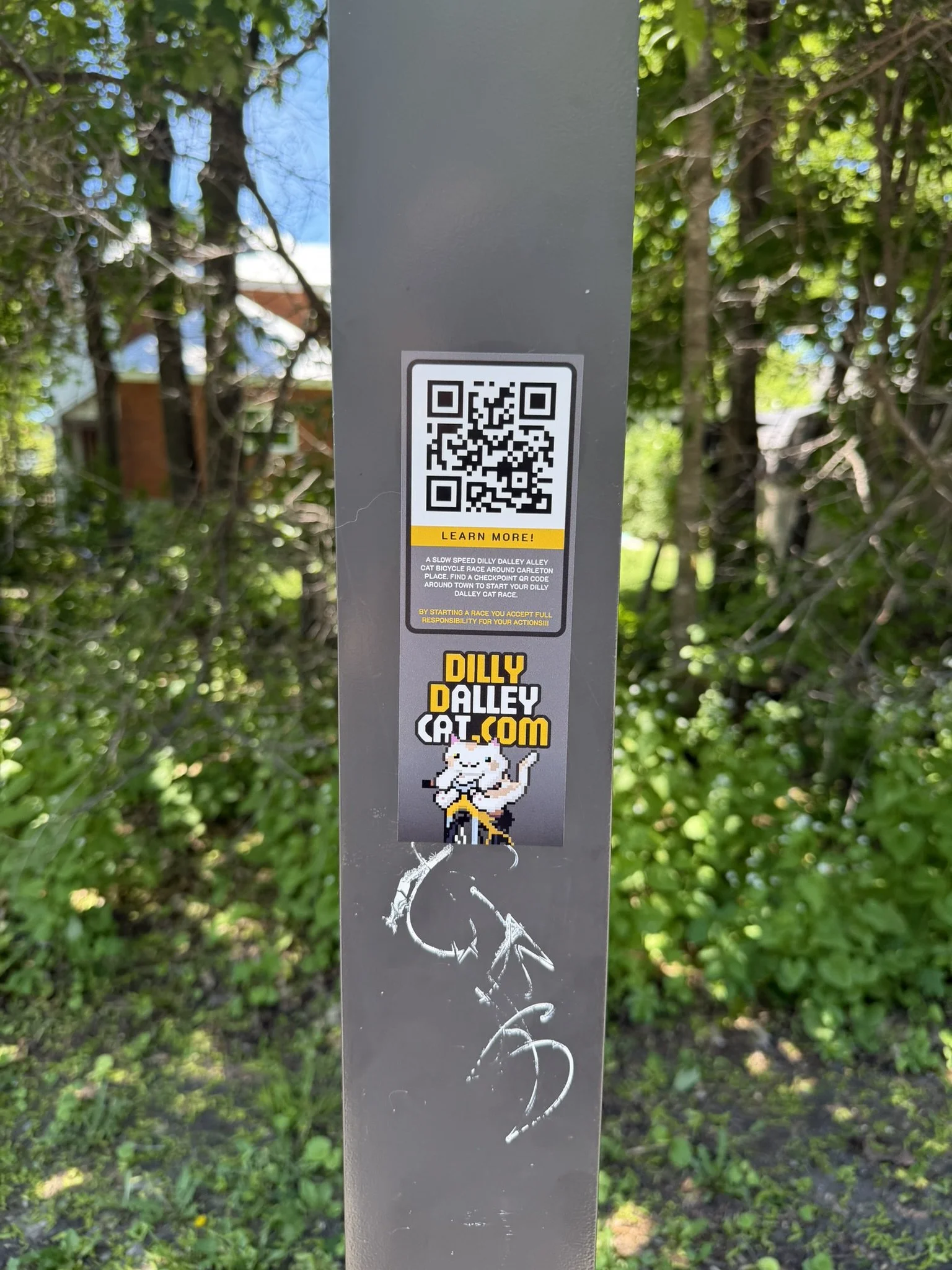
QR codes hidden across town.
A race system built rapidly with AI-assisted tools, deployed live, and tested directly against real human behavior.
Dilly Dalley Cat is part alley cat, part public art project, part local internet experiment.
The goal was to see if people would actually play and challenge myself and AI tools to build something solo.

Local Internet
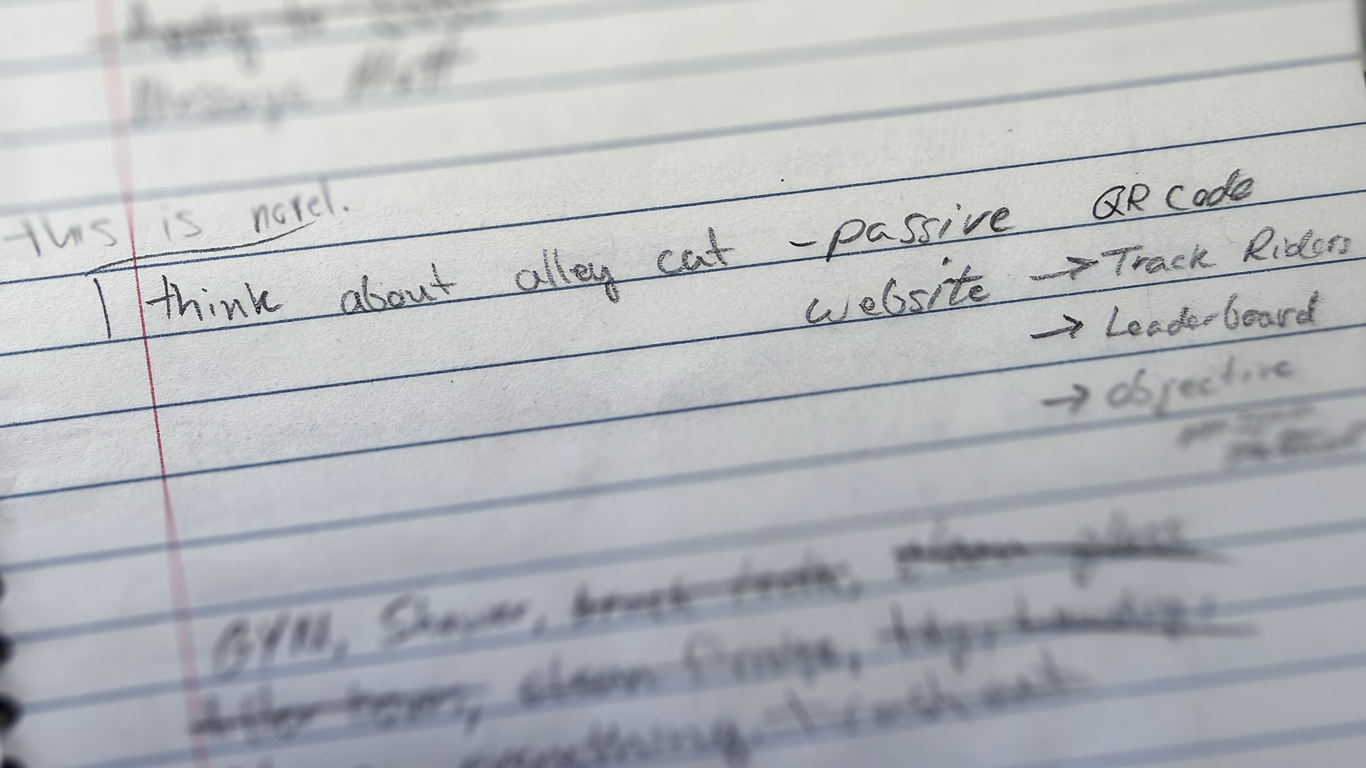
Most software ignores the little spaces in the local environment, Dilly Dalley Cat only works because of that.
Without the town, the stickers, the riders, the shortcuts, the weather, and the local knowledge, the system means nothing. The project explores what happens when software stops living entirely inside screens and becomes attached to physical movement through real space.
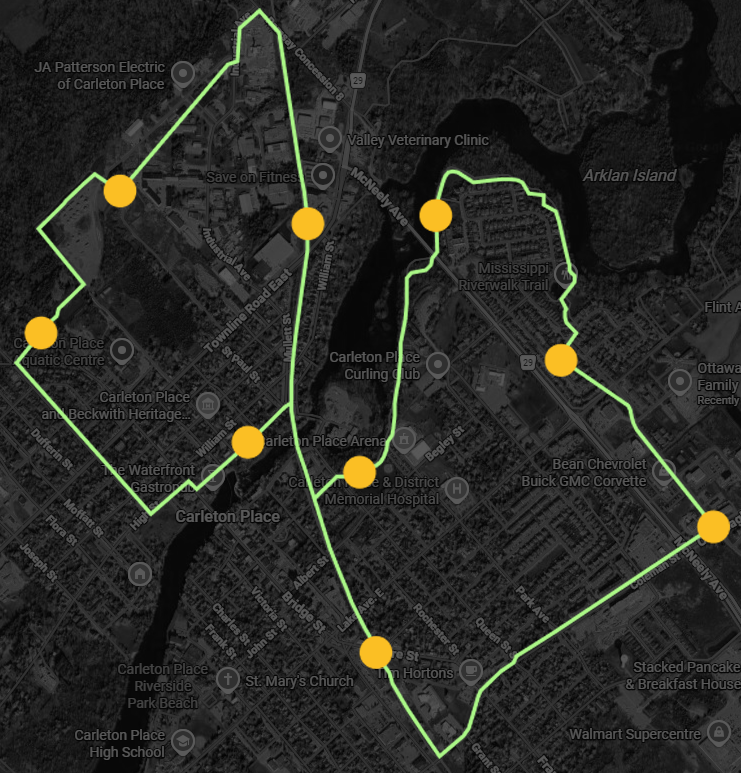
The Loop
Riders scan physical QR checkpoints hidden around town.
Each checkpoint contains:
Trivia
Route progression
Timing data
Leaderboard updates
Navigation hints
The first scanned checkpoint becomes the beginning of the loop.
To finish:
Every checkpoint must be visited, then riders must physically return to where they started.
No accounts.
No downloads.
Just movement, scanning, and local knowledge.
why it exists.
why it exists.
Dilly Dalley Cat exists because it has become possible for one person to build weird local things again. A temporary system built fast, put into the real world, and tested against actual human behavior. The project pulls from alley cat races, sticker culture, scavenger hunts, geocaching, graffiti, and guerrilla art projects. The kind of stuff that quietly appears in public space, changes how people move through a place for a little while, then disappears.
A random sticker on a pole becomes part of a hidden network. A QR code becomes a checkpoint. The town becomes the interface. Tools like Cursor, Vercel, Supabase, cheap printing, and browser GPS made it possible to build the entire thing alone. The software, the branding, the stickers, the maps, the checkpoints, the mascot, the leaderboard, all of it. That part matters to me. Not because I want to build a company out of it, but because I think there is something exciting about creative people being able to rapidly build real experiences for their communities without needing a team, funding, or permission first.
Most internet projects now are built to keep people inside feeds. This project only works if people leave their house, ride around town, scan things, get lost, compete, and talk to each other.
The main goal was honestly just to see if people would use it.
Would strangers scan random stickers?
Would people actually race?
Would local mythology start forming around it?
Would a weird cat mascot make people care more?
Dilly Dalley Cat is an experiment in local internet culture.
A playable layer temporarily attached to a real place.
From Prototype to Personality
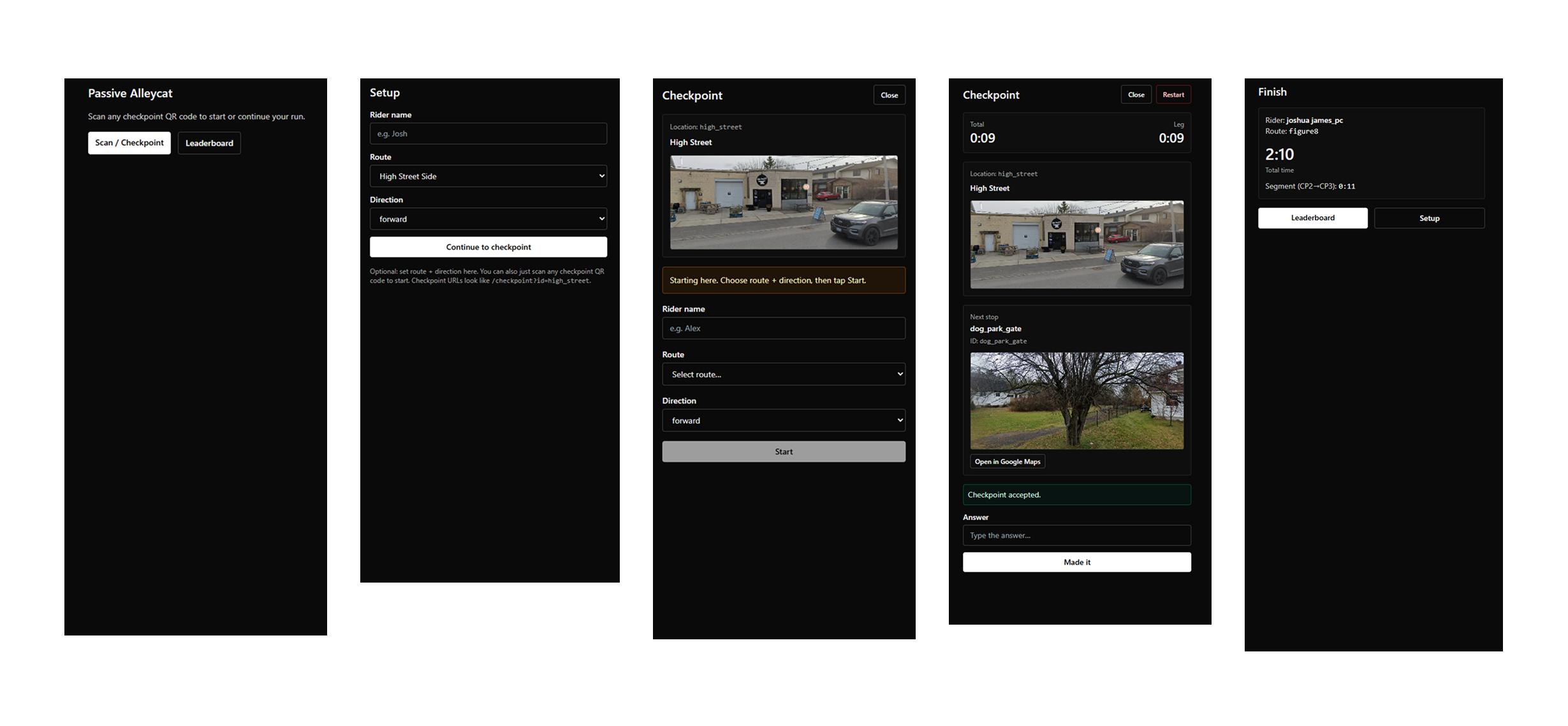
Starting With Function
Before focusing on visuals, the priority was speed—getting the app running locally, testing interaction patterns, and validating the structure before investing time into polish.
The first versions were intentionally rough:
Fast layouts
Minimal styling
Utility-first UI decisions
Rapid iteration over visual refinement
At this stage, the goal wasn’t aesthetics. It was proving the interaction worked.
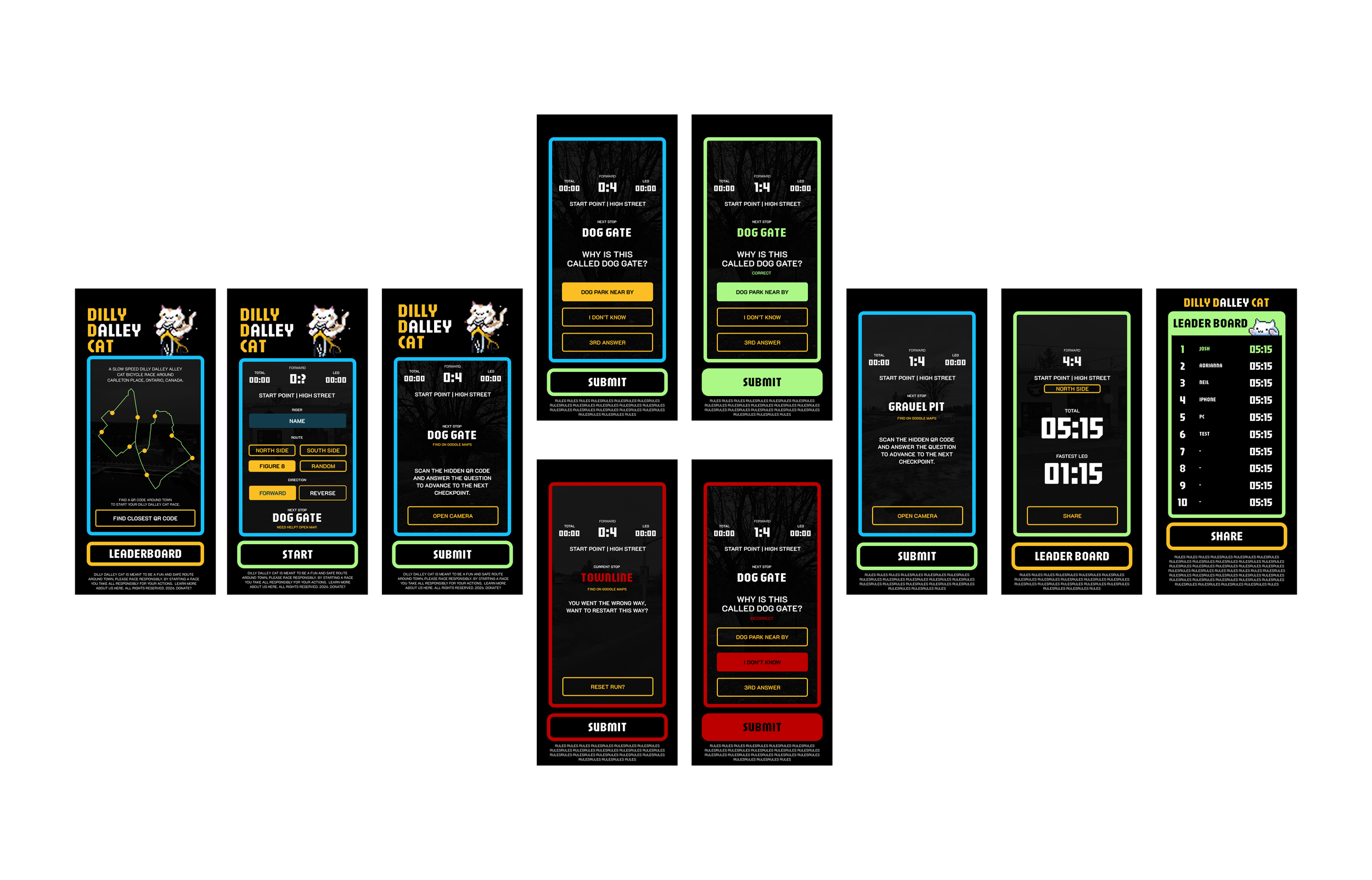
Establishing the Visual Direction
Once the structure felt solid, the focus shifted toward defining the identity of the app.
The challenge was finding a visual style that felt:
Playful without becoming noisy
Stylized without losing usability
Distinct enough to feel recognizable as its own world
The visual direction pulled from alley cat culture, stickers, street graphics, retro game UI, and hand-made zine aesthetics.
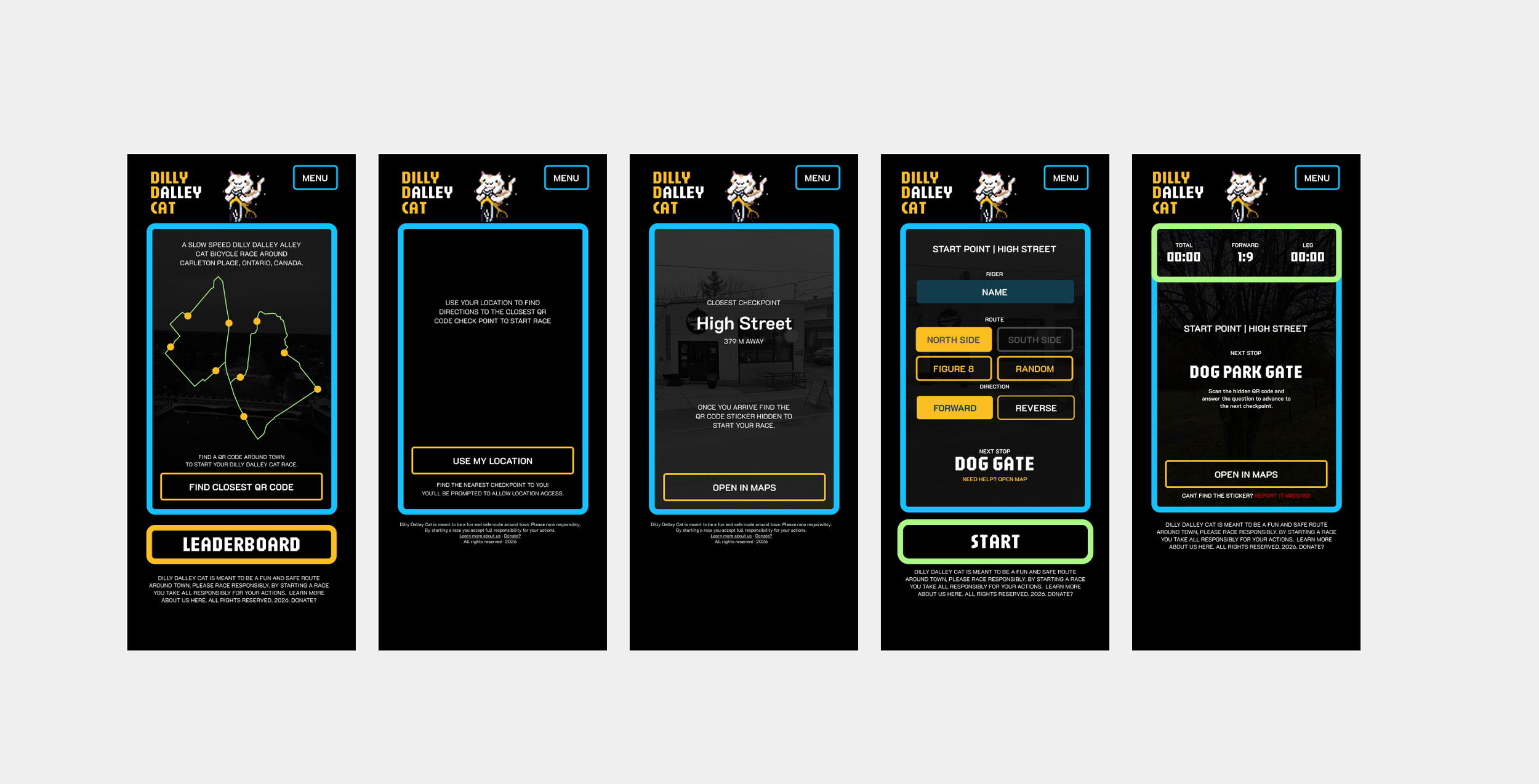
Designing the Interface
After locking the direction, the interface was rebuilt around the new visual language.
Instead of treating the art as decoration added afterward, the visuals became part of the interaction structure itself.
That included:
Custom UI elements
Graphic framing systems
Motion cues
Layered textures and iconography
The goal was to make the app feel tactile and alive rather than purely functional.
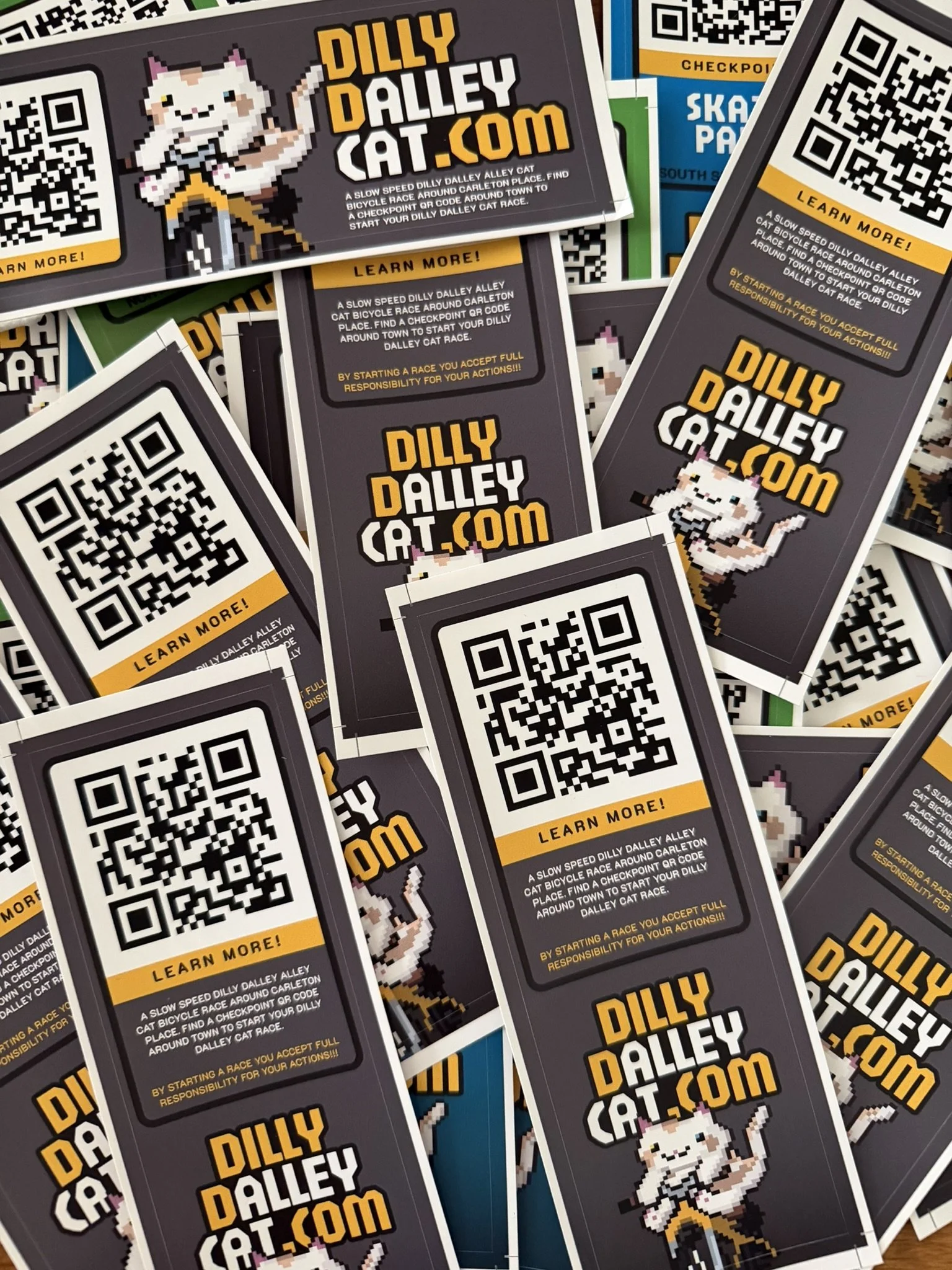
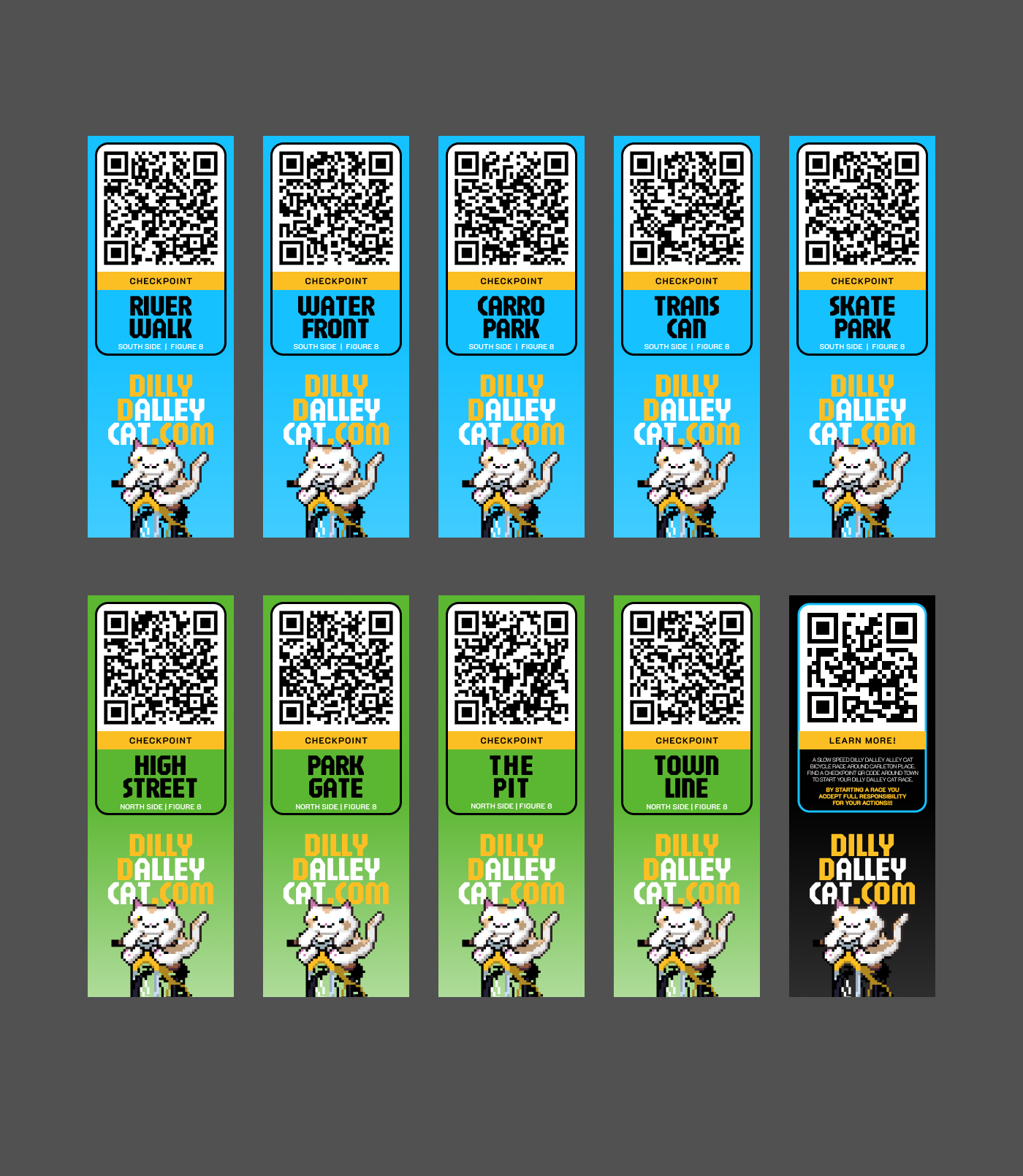
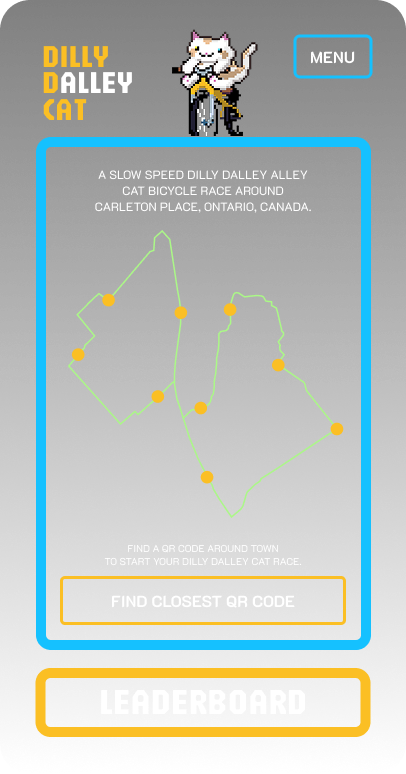
As of May 29th 2026, nine QR checkpoints are placed around Carleton Place, ON, linking to dillydalleycat.com. Riders start from any sticker, answer location riddles, and finish on a live leaderboard.
real world connection
THE DILLY DALLEY CAT
-
![]()
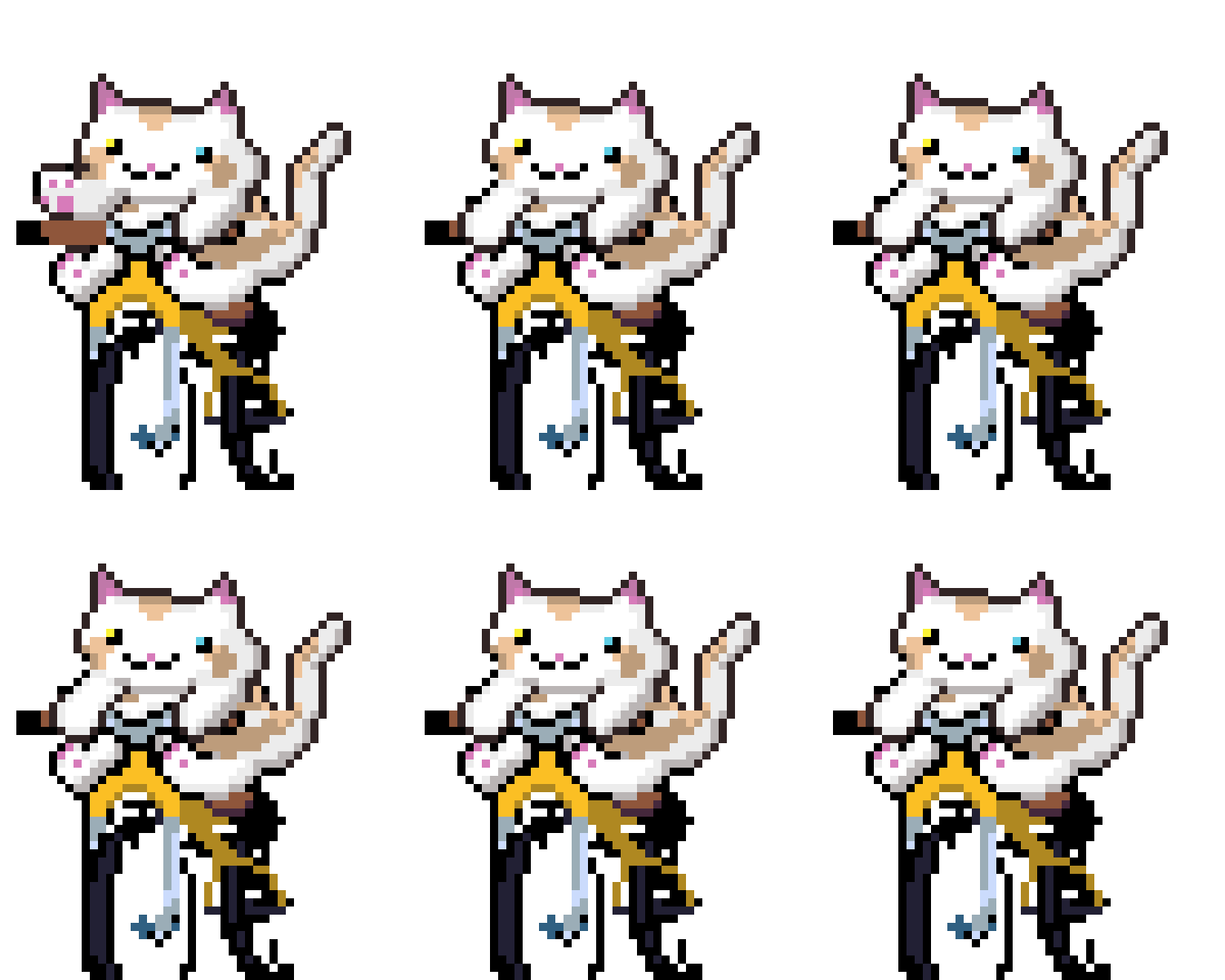
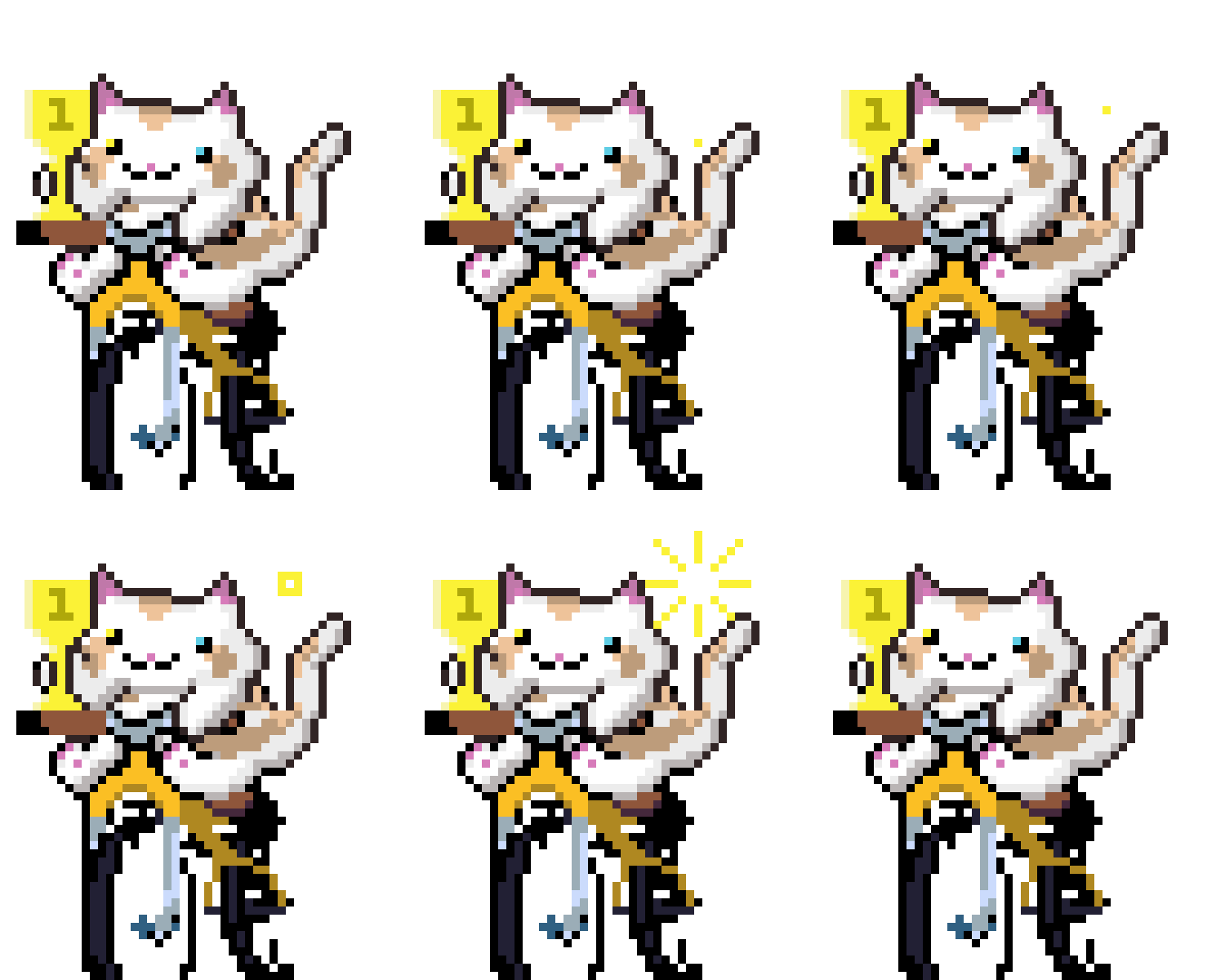
Harley Idle Animation
This is the Idle animation everyone will see, I wanted to convey dilly dalley feeling one should take on the race.
-
![]()
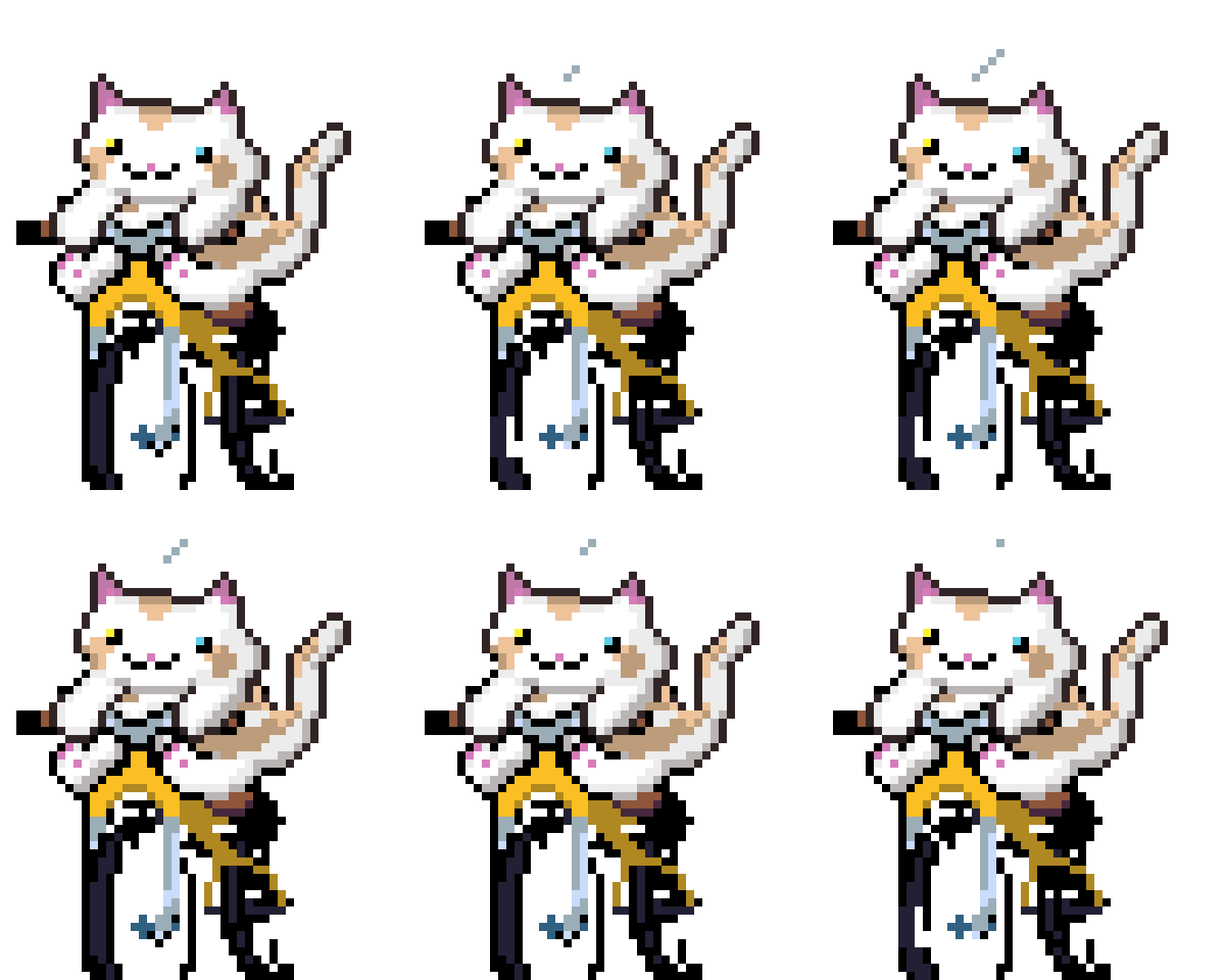
Harley Riding Animation
Simple two frame wheel animation, once that was in place the speed lines were added to show movement.
-
![]()
Harley Leaderboard
Future evolutions will included more fireworks and the number updated to the user position. I didn’t want the art to slow launch.
-
![]()
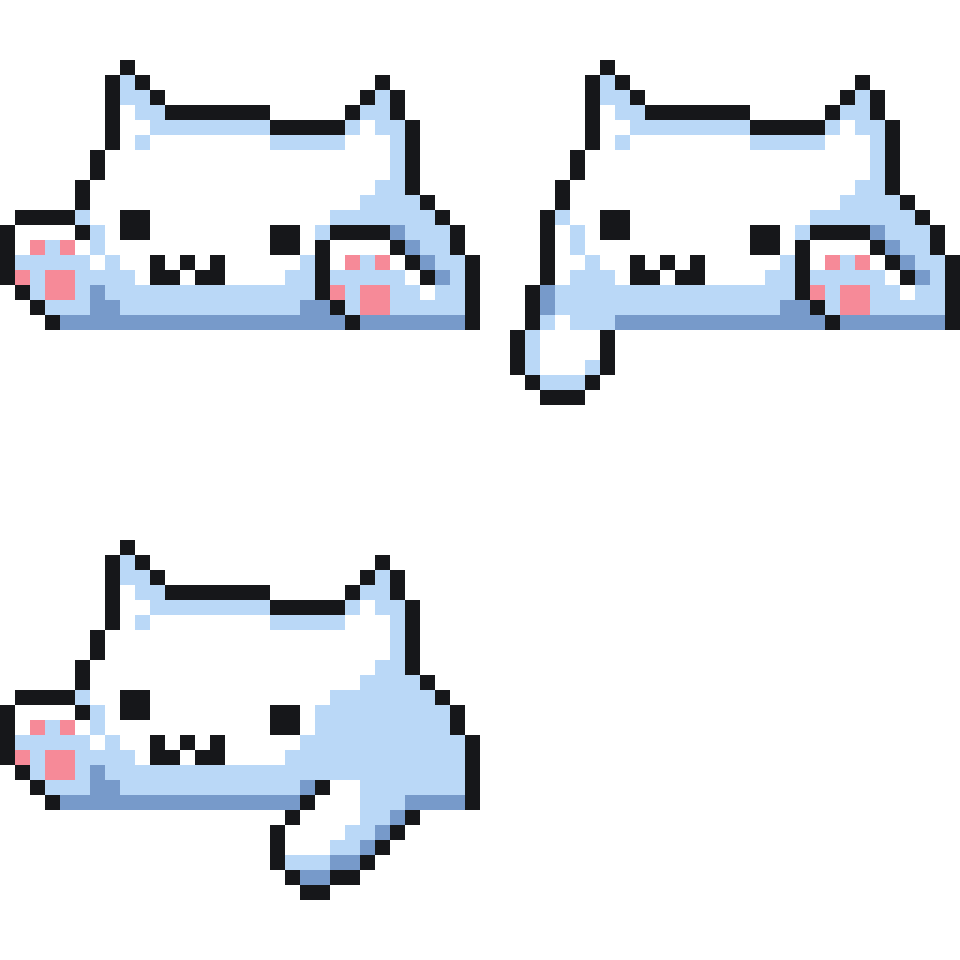
Know Your Meme
This is the digital version of bongo cat that was going around the web in 2018, earliest copy.
-
![]()
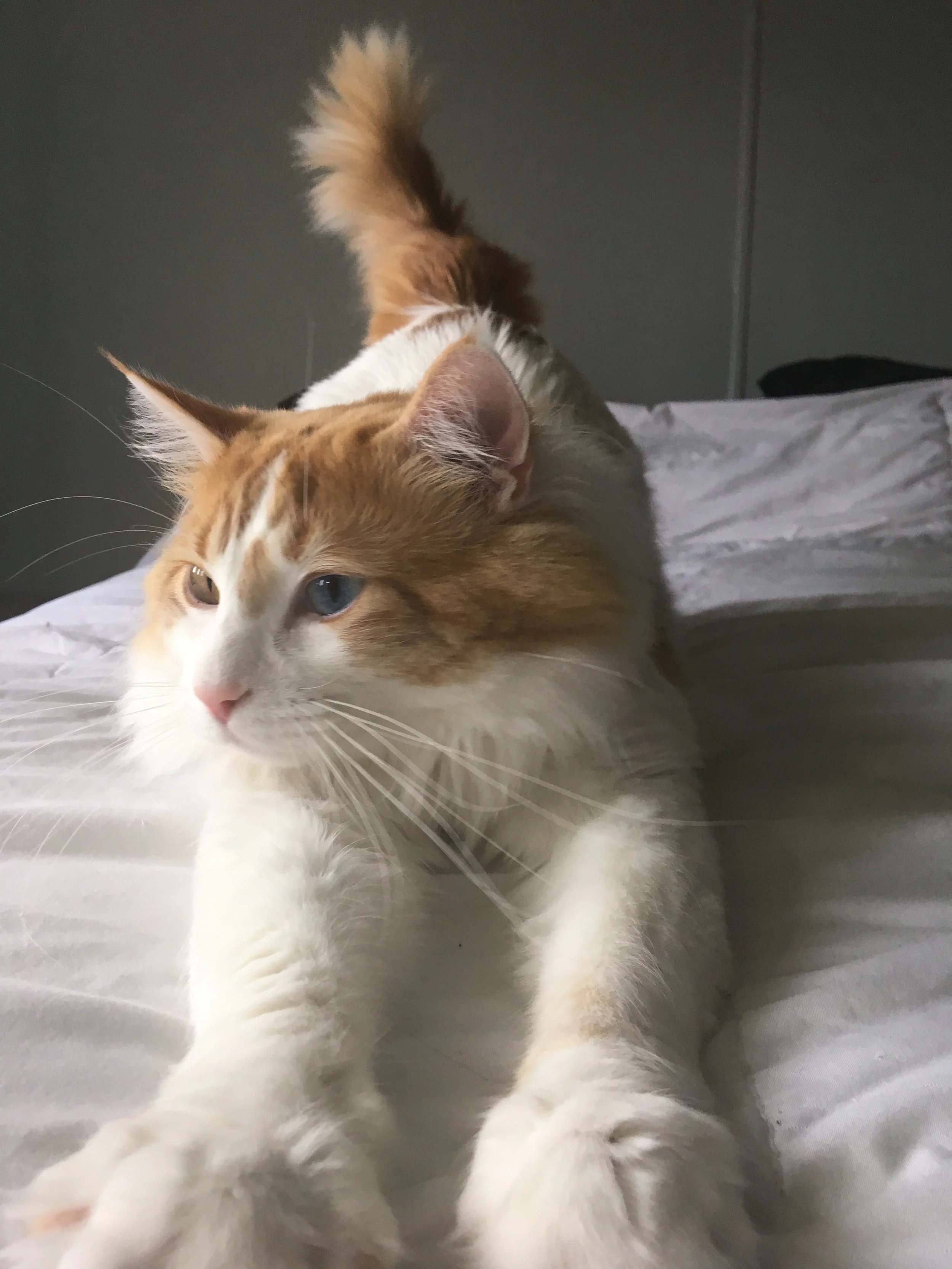
Real Harley!
In the fur! All the way from Montana, relaxing around town.
the extra mile
Join us on social media to see how the project grows!
future development
Currently the system is in its first iteration, future development will add seasons and new time attack routes, plus a true alley cat, you get to choose which checkpoint you go to, you just have to clear all 9.
Routes include, Beer Run, History Tour, and Time Attack. Even maybe something larger and in Ottawa to scale the whole project up! The system is designed to add these quickly over the summer.
Multiple chose question will have a random pool and additional questions for each checkpoint.
Character Cat Selection Screen, bringing more of my animals into the game!